What is "Traffic Jam" really about?
"Traffic Jam" by Stephen & Damian Marley is not a party song or celebration of cannabis consumption. Rather, it's a narrative-driven roots reggae track that uses a traffic stop as a framework to explore the contradiction between personal marijuana use and the state apparatus designed to criminalize it. The song's power lies in its specificity: the speaker admits openly to the officer ("smoking marijuana and I said yes I am") and then experiences the cascading consequences of that admission—license checks, registration demands, questions about occupation and destination, and ultimately an invasive vehicle search.
The song captures what many people experience in jurisdictions where cannabis remains illegal or whose enforcement patterns fall unevenly across different demographics. The narrative escalates from a simple traffic violation to what amounts to harassment: police search the car, find substances, and the charges multiply. The refrain "We are criminals" carries bitter irony—the system transforms admission into criminalization, and the space inside a vehicle becomes a search zone that expands the original infraction into something far more serious.
How does this cover reflect the original's intention?
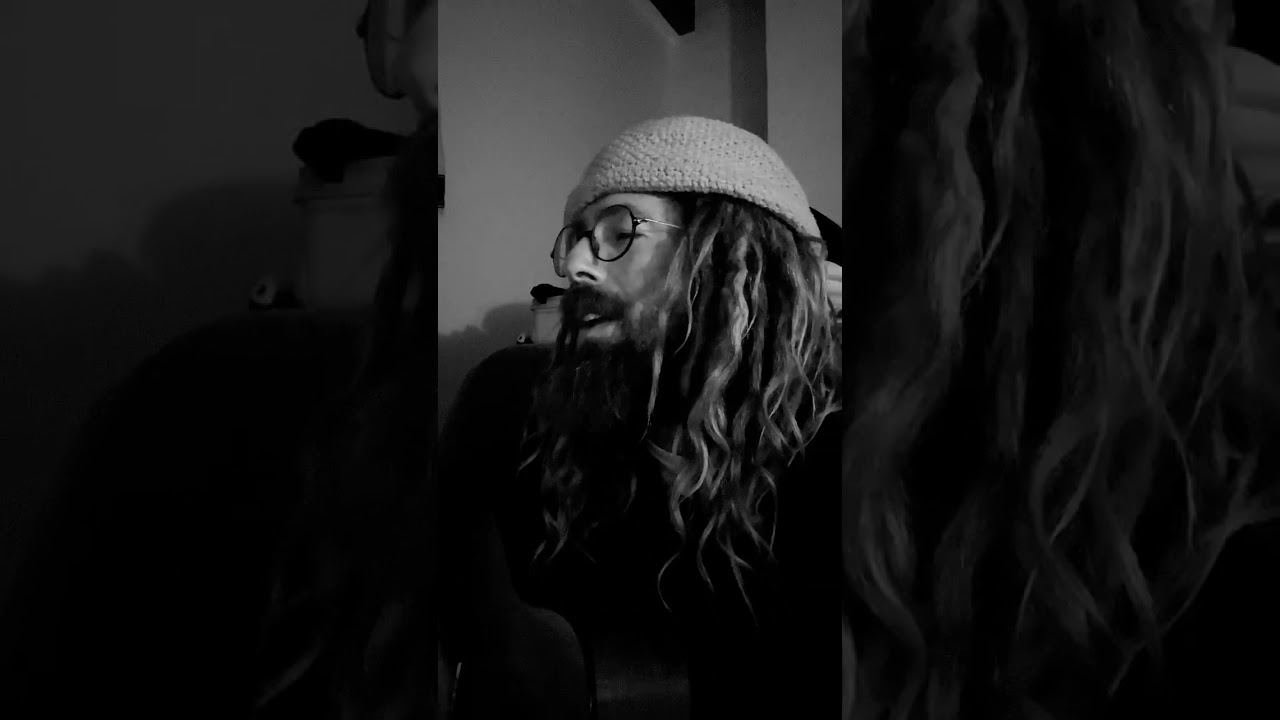
Sam Garrett's rendition, performed with Calvin Bennion on keys, strips the song down to its narrative core. By performing it as a duo in a backstage setting—what the description calls "a totally spontaneous moment"—the cover emphasizes the song's lyrical content over production. There's no studio sheen, no elaborate arrangement; instead, the listener encounters the song's message directly. Garrett's vocal delivery carries the weight of the narrative as it unfolds: the initial traffic stop, the exchange with the officer, the realization that admission has triggered a much larger apparatus of control.
The spontaneity of the performance also mirrors the song's themes. Just as the traffic stop in the lyrics is an unplanned encounter with state power, the backstage performance was an unplanned moment of musical connection. This contextual alignment—between form and content—gives the cover additional resonance. It's not a polished reinterpretation designed to soften the song's critique; it's a direct transmission of the original's urgency.
What does the escalation in the song reveal about policing?
The song's structure traces how a minor traffic violation becomes grounds for extensive search and seizure. The officer begins with routine questions—"Let me see the license and the registration. Where are you headed? What's your occupation?"—that sound procedural and standard. But once the driver admits to marijuana use, the interaction shifts. The car becomes subject to searches ("Scoop out the car until him find some stuff"), and the penalties compound: what began as a traffic issue becomes a series of charges that compound upon discovery.
This escalation reflects a real pattern in drug enforcement, where initial admissions or minor violations become doorways for expanded searches. The song critiques not just the illegality of cannabis in certain places, but the asymmetry of enforcement itself. A person who admits to using a substance can find themselves subject to vehicle searches, property seizures, and charges that multiply beyond the original infraction. The song's repeated assertion—"Now I'm jealous now even twice as much"—underscores how the initial transgression balloons into something substantially worse through legal machinery.
How do reggae artists use song to critique policy?
The Marley family has a long tradition of embedding social and political critique into reggae music. Bob Marley's work often addressed colonialism, inequality, and spiritual resistance. Stephen and Damian Marley continue this lineage by writing songs that confront contemporary issues—in this case, the contradictions of drug policy and racialized policing. "Traffic Jam" is not an abstract political statement; it's a story that listeners can recognize or imagine themselves in, which makes the critique visceral rather than rhetorical.
By putting the narrative into the first person and grounding it in a specific scenario, the song invites empathy and recognition. Someone pulled over and questioned by police can see themselves in the lyrics. Someone aware of disparities in drug enforcement can recognize the system being described. The song structure—verse, chorus, narrative repetition—makes the message memorable and shareable, which amplifies its reach beyond any single listener.
What is the significance of the original artists' perspective?
Stephen and Damian Marley, as sons of Bob Marley and members of the Melody Makers, inherit both a musical legacy and a particular vantage point on these issues. Bob Marley's own encounters with authorities, his advocacy for cannabis as a sacrament in Rastafarian practice, and his broader critiques of power structures inform how Stephen and Damian approach songwriting. "Traffic Jam" reflects this history: it's not just about marijuana use, but about the intersection of personal freedom, religious or spiritual practice, and state power.
The song also speaks to the historical criminalization of cannabis in ways that have disproportionately affected communities in the Caribbean and globally. The reggae genre itself emerged from contexts where marginalized people used music to process, resist, and transcend systemic oppression. By writing "Traffic Jam," Stephen and Damian situate themselves within that tradition of speaking truth through music.
Where to go from here
If you're interested in the intersection of reggae music and social commentary, exploring the broader Marley catalog—both Bob's original work and the subsequent generations' contributions—offers a deeper understanding of how the genre engages with political and spiritual themes. Sam Garrett's version demonstrates how covers can serve as vessels for these messages, reaching new audiences while maintaining the original's critical edge. For those exploring cannabis policy and its enforcement disparities, "Traffic Jam" offers both a narrative entry point and an artistic perspective that complements policy analysis with human experience.
]]>