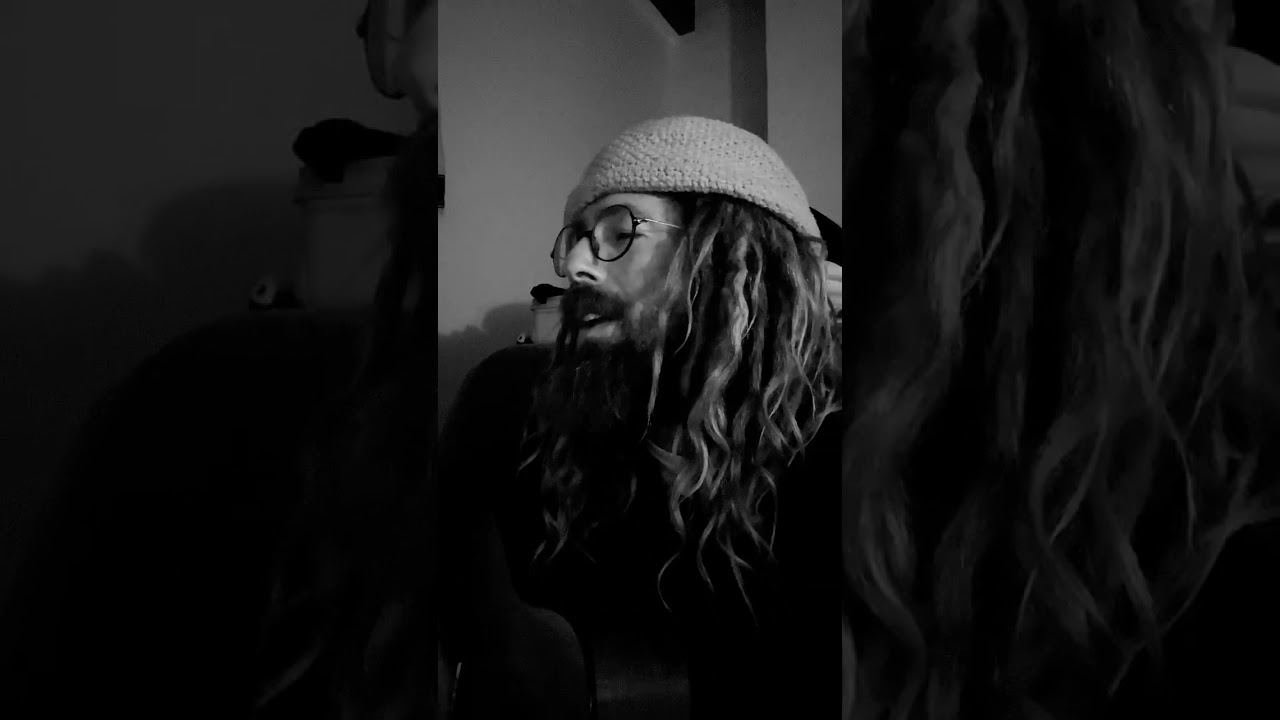
TLDR: In this brief meditative piece, Sam Garrett weaves together reflections on nostalgia, memory, and the human tendency to hold onto moments from the past. Through poetic language and sonic exploration, he examines how memories of "old moments" and "years gone by with the wind" shape our emotional landscape, while simultaneously exploring themes of trust, the alternation between good and difficult periods, and the inherent cycle of life that "goes, comes, and repairs" itself.
What Is Nostalgia and Why Does It Hold Such Power?
Nostalgia—a sentimental longing for the past—forms the opening premise of Garrett's reflection. At the outset of the piece (11s), he directly names nostalgia as the subject, calling it "nostalgia for the past, for old moments, for years gone by with the wind." This phrasing is significant: the image of years moving "with the wind" suggests that time carries our past moments away from us, making them distant, ethereal, and paradoxically more precious precisely because they are gone.
Garrett does not treat nostalgia as mere sentimental weakness. Instead, he acknowledges it as a genuine dimension of human experience. The memories he invokes are not abstract; they are concrete: "smiles, memories, beautiful feelings" (18s). By grounding nostalgia in sensory and emotional specificity, he validates the impulse to revisit what has already passed. This stands in contrast to many modern frameworks that encourage us to "stay present" and dismiss backward-looking as unhealthy or stuck.
How Does Sound and Sensation Connect Us to Memory?
A distinctive element of Garrett's approach is his use of sound itself as a vehicle for exploring memory. He states, "I made sound for you to [music] errer. I heard it by the sea" (21s, 26s). The reference to the sea—a boundary between past and present, a place where time seems both cyclical and eternal—suggests that memory is not purely mental but embodied and sensory. The sound he creates is meant to evoke, to stir, to make the listener *feel* the texture of what has been.
This sonic approach reflects a deeper truth: nostalgia operates through the body and the senses, not only through thought. A song, a smell, a sound can transport us more completely than any conscious reflection. By positioning himself as a sound-maker serving the listener's memory, Garrett suggests that art and music have a specific role in tending to our relationship with the past.
What Does It Mean That Life Moves Like a Headwind of Time?
Garrett describes time as "a headwind of [music] time" (28s), an evocative metaphor. A headwind pushes against you; it creates resistance. This characterization moves beyond the cliché of time as a linear river flowing forward. Instead, time is something that presses against us, that we must move through with effort. This resonates with the felt experience of loss: the past does not recede gently; it resists our attempts to hold it, and the holding itself requires emotional labor.
Within this difficult relationship with time, Garrett observes that "it's life in a good [music] moment of love and a bad one" (31s, 35s). This juxtaposition—good and bad, love and difficulty—is not presented as a problem to be solved but as the fundamental texture of existence. Life contains both. Neither negates the other. This echoes classical wisdom traditions that recognize duality as intrinsic to embodied existence.
How Does Trust Emerge When People Contain Contradiction?
One of the most profound observations in the piece concerns trust and human nature. Garrett states: "But there are good people, and there are both, who are even easier to trust" (35s, 38s). The phrase "there are both"—people who contain both good and difficult qualities—suggests a mature, non-idealized view of human character. The striking claim that such people are "even easier to trust" inverts conventional wisdom.
Typically, we might assume that people who are purely, consistently "good" are more trustworthy. But Garrett suggests the opposite: people who are conscious of their own contradiction, who acknowledge they contain both capacities, may actually be more trustworthy. This reflects a psychological truth: people who are aware of their shadow side are less likely to be blindsided by their own unconscious impulses, and thus more capable of genuine reliability. They do not labor under the burden of a false, unsustainable persona.
What Is the Cyclical Nature of Life That Garrett Describes?
The closing image brings the piece to a gentle resolution: "Life goes, comes, and repairs" (42s, 45s, 47s). This triad—goes, comes, repairs—presents life not as linear progress but as cycles. Things leave; things return; things mend. This cyclical view offers a kind of comfort: nothing is final. Loss is not permanent erasure. The past that seemed to slip away with the wind can, in some form, come again. And even what breaks can repair itself.
This cyclical perspective differs sharply from progress-based narratives that dominate modern culture. In those frameworks, the past is something to overcome and transcend. Here, the past is something that cycles back, that can be revisited, that informs the present. The repairs Garrett mentions are not a return to an earlier pristine state, but a healing that acknowledges what has broken and integrates that awareness.
Where to Go From Here
If this reflection on nostalgia, trust, and life's cycles resonates with you, consider exploring how your own relationship with the past shapes your present. What memories hold particular sentiency for you? What sensory details—a song, a smell, a location—bring those memories alive in your body? How might you honor nostalgia not as weakness, but as a legitimate way of knowing and feeling?
Additionally, reflect on Garrett's insight about trust and contradiction: in your own life, whom do you trust most easily? Are those people the ones who claim to be fully consistent and "good," or are they people who have integrated awareness of their own complexity? This inversion may reshape how you evaluate trustworthiness in those around you and in yourself.
Finally, experiment with the cyclical view of time that Garrett offers. Rather than experiencing loss as final, ask: how does what I've lost come back to me in new forms? How does repair happen, not through erasing the past, but through integrating it?