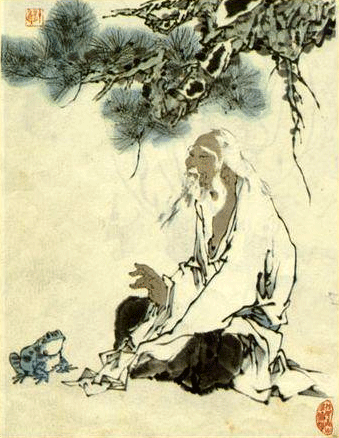
The Embrace of Wholeness: Wisdom in All Things
Chuang Tzu's assertion that "Great wisdom embraces all things" invites us to consider the expansive nature of wisdom itself. This statement suggests that true wisdom is not confined to a narrow understanding or a selective perspective; rather, it encompasses the entirety of existence, including the complexities and contradictions inherent in life. In a world often divided by opinions and beliefs, this teaching challenges us to cultivate a broader awareness that honors the interconnectedness of all beings and experiences.
To embrace all things is to recognize the inherent value in every aspect of life, from the mundane to the profound. This wisdom calls for a deep acceptance of reality as it is, rather than how we wish it to be. It encourages us to let go of rigid judgments and to approach life with an open heart and mind, fostering a sense of unity with the world around us. In this way, Chuang Tzu's words resonate deeply with the quest for understanding and harmony in a fragmented society.
The image / the metaphor
At first glance, the imagery in Chuang Tzu's quote evokes a sense of vastness and inclusivity. The verb "embraces" suggests a warm, nurturing action, one that envelops and holds close all that exists. This is not a passive acceptance but an active engagement with life in its entirety. The phrase "all things" encompasses not only the beauty and joy we encounter but also the pain, confusion, and challenges that life presents. It invites us to see the world as a tapestry woven from diverse threads, each contributing to the richness of the whole.
Diving deeper into the metaphor, we can understand "embracing" as a form of radical acceptance. It implies a willingness to hold space for contradictions and paradoxes, recognizing that wisdom often arises from the interplay of opposites. In Taoist thought, this aligns with the concept of yin and yang, where opposing forces are not in conflict but are interdependent and complementary. To embrace all things is to acknowledge that wisdom is found not only in clarity but also in ambiguity, and that the journey toward understanding is as important as the destination.
In the speaker's tradition
Chuang Tzu's philosophy is deeply rooted in Taoism, a tradition that emphasizes harmony with the Tao, or the fundamental nature of the universe. Central to this tradition is the idea of wu wei, or effortless action, which encourages individuals to align themselves with the natural flow of life rather than resist it. This notion resonates with the idea of embracing all things, as it suggests that true wisdom comes from recognizing and accepting the inherent rhythms of existence, rather than imposing our will upon it.
In the text of the Zhuangzi, we find numerous anecdotes that illustrate the importance of embracing the entirety of life. For instance, the story of the butterfly dream reflects the fluidity of identity and perception, suggesting that wisdom lies in the ability to navigate the uncertainties of existence without clinging to fixed notions of reality. This aligns with the broader Taoist understanding of sunyata, or emptiness, which teaches that all phenomena are interdependent and transient, inviting us to embrace the fullness of life without attachment.
Living the teaching
Consider a modern scenario where this teaching might resonate: a workplace filled with diverse opinions and conflicting ideas. In such an environment, embracing all things could mean actively listening to colleagues with differing viewpoints, recognizing the value in their perspectives, and fostering a culture of collaboration rather than division. This approach not only enhances creativity and innovation but also cultivates a sense of belonging and mutual respect, allowing wisdom to flourish amidst diversity.
In personal relationships, the teaching of embracing all things can be particularly transformative. Imagine navigating a difficult moment with a loved one, where emotions run high and misunderstandings abound. Instead of retreating into defensiveness or judgment, one might choose to embrace the complexity of the situation, acknowledging both their own feelings and those of their partner. This willingness to hold space for the full spectrum of human experience can lead to deeper connection and understanding, ultimately enriching the relationship.
A reflection
As we contemplate Chuang Tzu's profound statement, we are invited to reflect on our own relationship with wisdom and acceptance. How can we cultivate a practice of embracing all things in our daily lives? In what ways might our understanding of wisdom expand when we allow ourselves to fully engage with the complexities of existence, rather than seeking to simplify or categorize our experiences? This inquiry invites us to explore the depths of our own awareness and to consider the transformative power of acceptance in our journey toward wholeness.



Join the BrightStar Community
Stay connected with daily inspiration, event announcements, and community wisdom