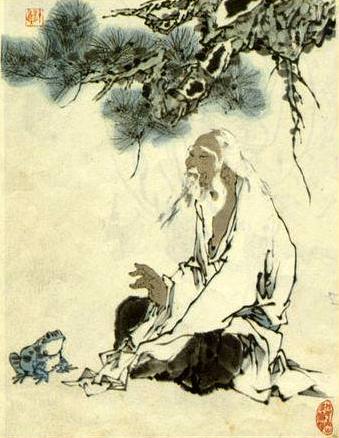
The Wisdom of Unity: Embracing the One
In the profound simplicity of Chuang Tzu's assertion, "Therefore the sage values the One," we are invited to explore the essence of unity that underlies all existence. This statement encapsulates a fundamental principle of Taoism, urging us to recognize the interconnectedness of all things. The sage, in valuing the One, embodies a deep understanding of the source from which all life flows, emphasizing the importance of harmony over division. In a world often marked by fragmentation and discord, this teaching serves as a timeless reminder of the power of unity and the wisdom that arises from it.
To delve deeper into this quote, we must consider the implications of valuing the One. It suggests a perspective that transcends the dualities of life—good and bad, self and other, success and failure. By embracing the One, the sage cultivates a sense of peace and clarity, recognizing that all phenomena are expressions of a singular reality. This understanding not only fosters personal tranquility but also encourages a compassionate engagement with the world, as the sage sees themselves in others and vice versa. Thus, the quote becomes a call to awaken to the profound unity that exists beneath the surface of our daily experiences.
The image / the metaphor
The imagery within Chuang Tzu's quote evokes a sense of wholeness and completeness. The term "the One" suggests a singular essence that binds all things together, a source from which all diversity emerges. The sage, as a figure of wisdom, embodies the ability to perceive this unity amidst the apparent chaos of life. The choice of the verb "values" indicates not just recognition but a deep appreciation and prioritization of this unity, suggesting that the sage actively cultivates a relationship with the One, allowing it to guide their thoughts and actions.
Diving deeper into the metaphor, we can see that valuing the One is akin to nurturing a garden where all plants coexist harmoniously. Each flower, tree, and blade of grass contributes to the beauty of the whole, yet they are distinct in their forms and functions. The sage, in this sense, becomes a gardener of the spirit, tending to the understanding that while individual experiences may differ, they all stem from the same source. This perspective invites us to embrace diversity while remaining anchored in the recognition of our shared essence, fostering a sense of belonging and interconnectedness.
In the speaker's tradition
Chuang Tzu's teachings are deeply rooted in the Taoist tradition, which emphasizes the importance of living in accordance with the Tao, or the Way. This concept resonates with ideas such as dharma in Buddhism, which refers to the natural order of the universe, and kenosis in Christian mysticism, which speaks to the self-emptying love that allows for unity with the divine. The sage's valuing of the One reflects a profound understanding of sunyata, or emptiness, where the realization of interconnectedness leads to liberation from the illusions of separateness.
In the Zhuangzi, the text attributed to Chuang Tzu, we find numerous anecdotes illustrating the sage's wisdom in navigating the complexities of life. One such story involves a fish who, upon realizing its own nature, swims freely in the vast ocean, embodying the principle of unity with all aquatic life. This narrative serves as a metaphor for the sage's journey toward understanding the One, highlighting the importance of recognizing our place within the greater tapestry of existence. The teachings of Chuang Tzu encourage us to embrace this unity, allowing it to inform our actions and relationships.
Living the teaching
In our modern lives, the teaching of valuing the One can manifest in various ways. Consider a workplace scenario where collaboration is essential for success. When individuals prioritize their personal agendas over the collective goal, tension and conflict often arise. However, when team members embrace the idea of unity, recognizing that their contributions are part of a larger purpose, they can work together more harmoniously. This shift in perspective not only enhances productivity but also fosters a sense of community and shared responsibility, illustrating the practical application of Chuang Tzu's wisdom.
Another poignant application of this teaching can be found in our personal relationships. Imagine a moment of conflict with a loved one, where misunderstandings and hurt feelings threaten to create a rift. By valuing the One, we can step back and recognize that our connection transcends the immediate disagreement. This awareness allows us to approach the situation with compassion and empathy, seeking to understand the other's perspective while also expressing our own. In doing so, we cultivate a deeper bond rooted in the recognition of our shared humanity, embodying the essence of the sage's wisdom.
A reflection
As we contemplate Chuang Tzu's profound statement, we are invited to reflect on our own lives and the ways in which we may cultivate a deeper appreciation for the One. In what areas do we find ourselves caught in the illusion of separateness, and how might we shift our perspective to embrace unity? This contemplative question encourages us to explore the richness of our interconnectedness, inviting us to live more fully in alignment with the wisdom of the sage.



Join the BrightStar Community
Stay connected with daily inspiration, event announcements, and community wisdom