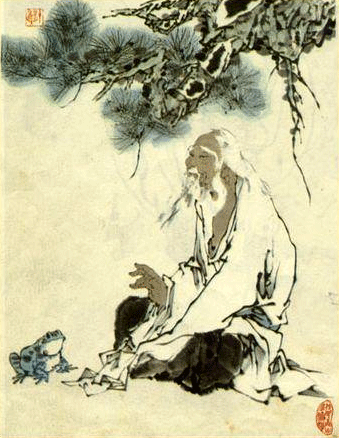
The Harmony of Acceptance: Embracing the Way
Chuang Tzu's assertion that "to regard whatever happens as fitting is to be near the Way" invites us to explore the profound depths of acceptance in our lives. This perspective encourages us to align ourselves with the natural flow of existence, recognizing that every event, whether joyous or challenging, is part of a larger tapestry. In a world often marked by resistance and struggle, this teaching serves as a gentle reminder of the peace that can be found in surrendering to the unfolding of life.
Delving deeper, we find that this quote encapsulates a fundamental aspect of Taoist philosophy: the idea that the universe operates according to its own rhythm, and our task is to harmonize with it. By embracing whatever arises as fitting, we cultivate a sense of trust in the process of life itself. This acceptance does not imply passivity; rather, it invites us to engage with life fully, recognizing that each moment is an opportunity for growth and understanding. In this way, Chuang Tzu beckons us to step closer to the essence of the Tao, the Way that underlies all existence.
The image / the metaphor
At its core, Chuang Tzu's quote evokes a vivid image of flowing water, effortlessly adapting to the contours of its surroundings. The verbs "regard" and "fitting" suggest an active engagement with our experiences, urging us to perceive life not as a series of obstacles but as a harmonious unfolding. This imagery resonates with the natural world, where plants bend toward sunlight and rivers carve their paths through the landscape, embodying the principle of wu wei, or effortless action. In this sense, the quote invites us to cultivate a mindset that embraces change and uncertainty as integral aspects of our journey.
Going deeper, the metaphor of fittingness speaks to the interconnectedness of all things. Just as a puzzle piece finds its place within a larger picture, our experiences—both pleasant and painful—contribute to the wholeness of our lives. This fittingness is not merely about acceptance; it is about recognizing our role within the grand design of existence. By seeing ourselves as part of this intricate web, we can approach each moment with a sense of curiosity and openness, allowing the Way to guide us toward deeper understanding and fulfillment.
In the speaker's tradition
Chuang Tzu's teachings are rooted in the rich tradition of Taoism, which emphasizes living in harmony with the Tao, or the fundamental nature of the universe. This philosophy resonates with concepts such as sunyata, or emptiness, which encourages us to let go of rigid attachments and embrace the fluidity of life. Similarly, the idea of kenosis, or self-emptying, found in various spiritual traditions, aligns with Chuang Tzu's call to release our preconceived notions and judgments, allowing us to experience life as it is, rather than how we wish it to be.
In the text of the Zhuangzi, we find numerous anecdotes that illustrate the importance of acceptance and adaptability. One such story involves a butcher who skillfully carves meat by following the natural lines of the animal, demonstrating the principle of wu wei in action. This narrative serves as a poignant reminder that when we align ourselves with the flow of life, we can navigate challenges with grace and ease, embodying the very essence of the Way that Chuang Tzu so eloquently articulates.
Living the teaching
Consider a modern scenario where this teaching can be applied: imagine facing an unexpected job loss. Initially, the shock and uncertainty may provoke feelings of fear and resistance. However, by embracing the situation as fitting, one can begin to explore new opportunities that may have otherwise gone unnoticed. This shift in perspective allows for a more expansive view of life, where the loss becomes a catalyst for growth, prompting a reevaluation of one’s passions and aspirations.
In the realm of relationships, the teaching of acceptance can be equally transformative. Picture a moment of conflict with a loved one, where misunderstandings arise and emotions run high. By regarding the situation as fitting, we can approach the disagreement with compassion and openness, recognizing that it is an opportunity for deeper connection and understanding. This practice of acceptance fosters a sense of unity, allowing both individuals to navigate the complexities of their relationship with grace and empathy.
A reflection
As we contemplate Chuang Tzu's wisdom, we are invited to reflect on our own relationship with acceptance. In what areas of your life do you find it challenging to regard events as fitting? Consider how embracing the flow of life might transform your experiences, leading you closer to the Way. This inquiry encourages us to cultivate a deeper awareness of our responses to life's unfolding, inviting us to align ourselves with the natural rhythms of existence.



Join the BrightStar Community
Stay connected with daily inspiration, event announcements, and community wisdom