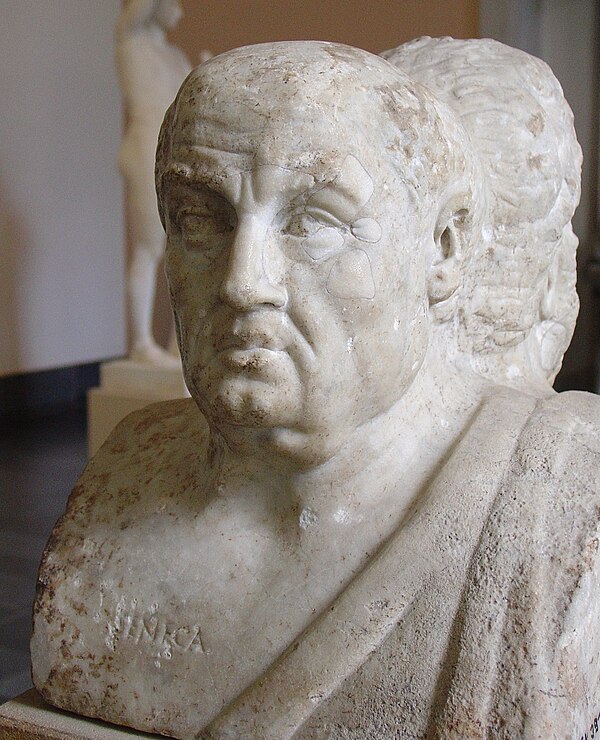
The Greed of Time: A Stoic Reflection
Seneca's assertion that "Time is the one thing of which it is right to be greedy" invites us to reconsider our relationship with the most elusive and precious resource we possess. In a world that often prioritizes material wealth and external achievements, this quote serves as a poignant reminder of the intrinsic value of time. It challenges us to reflect on how we allocate our hours and moments, urging us to cultivate a mindset that honors the fleeting nature of existence.
In this light, Seneca's words resonate deeply with the urgency of living a life that is both intentional and meaningful. The Stoic philosopher encourages us to seize time with both hands, to be greedy not in the sense of hoarding but in the pursuit of a life well-lived. This perspective compels us to examine our priorities, to discern what truly matters, and to engage fully with the present moment, for it is in the now that life unfolds.
The image / the metaphor
At first glance, the imagery of greed in relation to time may seem paradoxical. Greed typically conjures notions of excess and avarice, yet Seneca redefines it within the context of our temporal existence. The verb "to be greedy" suggests an active pursuit, a hunger for more than the superficial allocation of hours. It evokes a sense of urgency, as if time itself is a treasure that we must seek out and claim, rather than something to be squandered or taken for granted.
Diving deeper into this metaphor, we can perceive time as a canvas upon which we paint the story of our lives. Each moment is a brushstroke, and the act of being greedy for time becomes an invitation to create a masterpiece. This perspective encourages us to engage with our experiences fully, to savor the richness of each moment, and to recognize that time, once lost, cannot be reclaimed. In this sense, Seneca's call to be greedy for time is a call to live with intention and purpose.
In the speaker's tradition
Seneca's thoughts on time are deeply rooted in the Stoic tradition, which emphasizes the importance of virtue, self-control, and rationality. Central to Stoicism is the concept of living in accordance with nature, which includes recognizing the transient nature of life. This aligns with the Buddhist notion of *anicca*, or impermanence, which teaches that all things are in a constant state of flux. Both traditions urge us to cultivate mindfulness and to appreciate the present moment, as it is the only time we truly possess.
In his work "On the Shortness of Life," Seneca articulates the idea that life is not inherently short, but rather that we often waste it on trivial pursuits. This echoes the teachings found in the *Bhagavad Gita*, where the concept of *dharma* emphasizes the importance of fulfilling one's duty with awareness and intention. Just as the Gita encourages us to act with purpose, Seneca's exhortation to be greedy for time implores us to engage with our lives fully, to embrace our responsibilities, and to make choices that reflect our deepest values.
Living the teaching
Consider a modern scenario in which a busy professional finds themselves overwhelmed by the demands of work, social obligations, and the incessant pull of technology. In this context, Seneca's teaching becomes a guiding light, urging the individual to reclaim their time by prioritizing what truly matters. By consciously setting boundaries around work hours, limiting distractions, and dedicating time to personal passions and relationships, one can embody the essence of being greedy for time. This shift not only enhances productivity but also fosters a deeper sense of fulfillment and joy.
In relationships, the application of this teaching can be equally transformative. Imagine a parent who is often preoccupied with work or personal concerns, inadvertently neglecting quality time with their children. By embracing Seneca's wisdom, the parent can choose to be present, to engage in meaningful conversations, and to create lasting memories. This intentionality not only strengthens familial bonds but also enriches the parent’s own experience of life, reminding them that time spent with loved ones is a treasure beyond measure.
A reflection
As we contemplate Seneca's assertion about the value of time, we are invited to ask ourselves: How am I currently spending my time, and what changes can I make to align my daily actions with my deepest values? This question encourages a reflective practice, prompting us to evaluate our priorities and to consider whether we are living in accordance with our true intentions. By embracing this inquiry, we can begin to cultivate a life that honors the precious gift of time, allowing us to live more fully and authentically.