EveryEvent PDX

すべてのEventsを見る

Find every event in Portland

events

Concerts & Live Music
Festivals
Sports & Recreation
Food & Drink
Arts & Culture
Community
Family & Kids
Nightlife
Comedy
Theater
人気の目的地
BaliSedonaLos AngelesCosta RicaNew YorkSan FranciscoAustinMiamiJoshua TreeTulum
すべてのカテゴリを見るすべての目的地を見る

すべての機能を探索

イベントを成長させる強力なツール

プラットフォーム機能

スマートダイナミックプライシング
チケットカテゴリ
座席指定
カート放棄リカバリー
訪問者リカバリー
寄付とスライディングスケール
アフィリエイトシステム
チケットスキャナー
クーポンコード
カスタム質問
チケット共有
アップセルとアドオン
分析とレポート
メールシーケンス
ウェイトリスト / 通知 / リマインダー
探索
Discovery HubArtists & PerformersVenuesKnowledge Base
すべての機能を見る私たちについて
料金ブログ
すべてのイベントを見る

events

Concerts & Live MusicFestivalsSports & RecreationFood & DrinkArts & CultureCommunityFamily & KidsNightlife

人気の目的地

BaliSedonaLos AngelesCosta RicaNew YorkSan Francisco

探索

Discovery HubArtists & PerformersVenuesKnowledge Base

プラットフォーム機能

スマートダイナミックプライシングチケットカテゴリ座席指定カート放棄リカバリー訪問者リカバリー寄付とスライディングスケールアフィリエイトシステムチケットスキャナークーポンコードカスタム質問チケット共有アップセルとアドオン分析とレポートメールシーケンスウェイトリスト / 通知 / リマインダー
すべての機能を見る私たちについて
料金ブログ
ログイン新規登録イベント主催者
  • Browse All Events
  • Concerts & Live Music
  • Festivals
  • Sports & Recreation
  • Food & Drink
  • Arts & Culture
  • Community
  • Family & Kids
  • Nightlife
  • すべてのカテゴリ →
  • Seattle
  • Hood River
  • Bend
  • Oregon Coast
  • Mt. Hood
  • All Destinations →
  • For Promoters
  • For Artists
  • For Venues
  • For Festivals
  • For Event Spaces
  • For Nonprofits
  • For Bloggers
  • For Speakers
  • Brand Ambassador
  • Case Studies
  • 35万人以上のバイヤーネットワーク
  • カート放棄リカバリー
  • スマートダイナミックプライシング
  • チケットカテゴリ
  • 定期イベント
  • 座席指定
  • アフィリエイトシステム
  • ウェイトリスト / 通知
  • チケットスキャナー
  • 埋め込みウィジェット
  • すべての機能 →
  • 概要
  • The Ecosystem
  • ブログ
  • 用語集
  • Inspiration
  • ヘルプセンター
  • お問い合わせ
  • APIドキュメント
  • ブランドアセット
  • 採用
  • プレス
  • 利用規約
  • プライバシーポリシー

Events

  • Browse All Events
  • Concerts & Live Music
  • Festivals
  • Sports & Recreation
  • Food & Drink
  • Arts & Culture
  • Community
  • Family & Kids
  • Nightlife
  • すべてのカテゴリ →

Getaways

  • Seattle
  • Hood River
  • Bend
  • Oregon Coast
  • Mt. Hood
  • All Destinations →

For Organizers

  • For Promoters
  • For Artists
  • For Venues
  • For Festivals
  • For Event Spaces
  • For Nonprofits
  • For Bloggers
  • For Speakers
  • Brand Ambassador
  • Case Studies

機能

  • 35万人以上のバイヤーネットワーク
  • カート放棄リカバリー
  • スマートダイナミックプライシング
  • チケットカテゴリ
  • 定期イベント
  • 座席指定
  • アフィリエイトシステム
  • ウェイトリスト / 通知
  • チケットスキャナー
  • 埋め込みウィジェット
  • すべての機能 →

会社

  • 概要
  • The Ecosystem
  • ブログ
  • 用語集
  • Inspiration
  • ヘルプセンター
  • お問い合わせ
  • APIドキュメント
  • ブランドアセット
  • 採用
  • プレス
  • 利用規約
  • プライバシーポリシー
EveryEvent
© 2026 EveryEvent Portland. 全著作権所有.
Featured

Psychedelic States of Consciousness: NaturalDimensions of the Mind

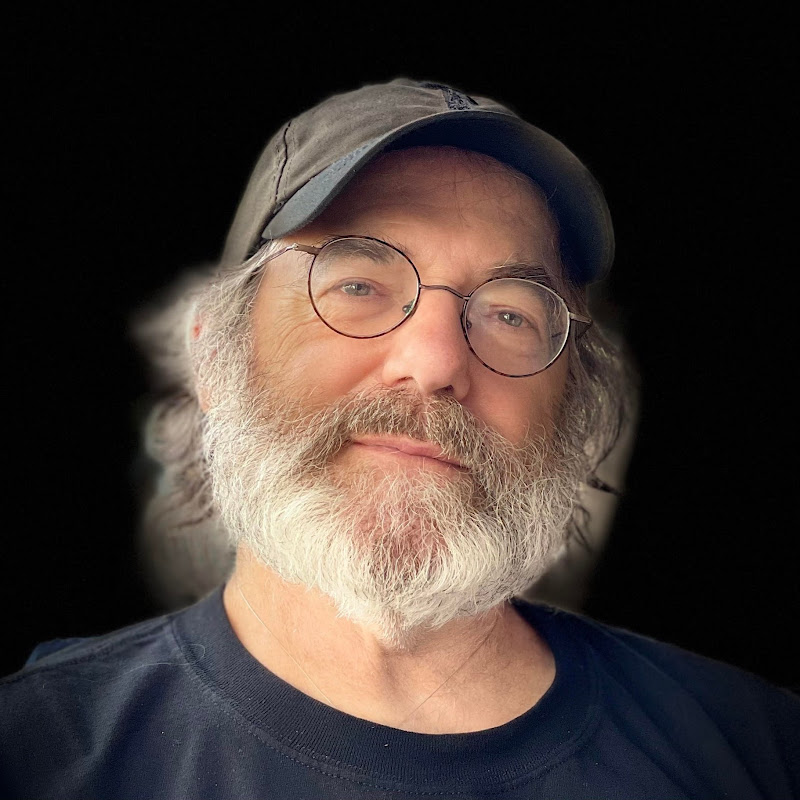
Paul Stamets
Paul Stamets
Mar 13, 2023
5 min read
Watch · 5

TLDR: In this talk, a mycologist challenges the misconceptions surrounding psychedelic substances and argues that altered states of consciousness—including dreams—are natural neurobiological phenomena that humans and animals experience regularly. Rather than aberrations or markers of insanity, these states represent dimensions of perception that have shaped human evolution and cognition.

Read · 5 sections

How Did the Myth of Psychedelic Insanity Begin?

During the speaker's early years, cultural and governmental narratives framed psychedelic use as a direct pathway to mental illness. The claim was stark and unequivocal: take LSD five or six times, and you would become certifiably insane. This propaganda was widely accepted and shaped the beliefs of an entire generation, including the speaker himself. He absorbed these warnings as fact, allowing fear-based messaging to drive his understanding of what these substances actually do to the brain (0:01–0:10).

This mischaracterization persisted for decades, creating a cultural divide between those substances deemed acceptable (alcohol, pharmaceutical medications) and those labeled dangerous (LSD, psilocybin). The distinction was not based on neurological evidence but on legal and social policy. What the speaker would later discover is that the propaganda was fundamentally flawed—not because psychedelics are completely safe, but because they don't produce the outcome the propaganda claimed.

Are Altered States of Consciousness Unnatural?

The speaker presents a counterargument grounded in biology: altered states of consciousness are not aberrations but rather a natural feature of animal neurology. The evidence begins with observation. Anyone who has owned a dog or cat has witnessed them dreaming—their eyes moving rapidly, their paws twitching, their bodies responding to an internal neurological process that resembles wakefulness but occurs in sleep (0:21–0:28).

If animals dream, and humans are animals, then humans must also enter altered states of consciousness as a routine, nightly occurrence. The speaker identifies this clearly: "We all enter into the psychedelic space every night when we fall asleep we dream" (0:31–0:36). This reframing is crucial. The psychedelic experience is not alien to human neurology—it is continuous with the dreaming state that virtually every human being experiences.

The implication is significant: if dreams are normal and natural, and if dreams represent a altered state of consciousness qualitatively similar to psychedelic states, then the pathologization of psychedelics becomes inconsistent with basic neurobiology. Both dreams and psychedelic experiences involve:

  • Altered perception of time and space
  • Vivid visual and sensory experiences
  • Reduced engagement with ordinary logical processing
  • Access to unconscious or subconscious material

What Does Exploring Consciousness Reveal About Human Evolution?

The speaker was born in 1955, and from early childhood, he was drawn to instruments that revealed hidden dimensions of reality. A microscope revealed the microscopic world. Binoculars brought distant objects into focus. A telescope opened the cosmos. Each tool expanded his perception of what was possible to see—what dimensions of reality existed beyond ordinary human sensation (0:51–0:65).

He notes: "I went wow there's so many different dimensions" (0:63–0:65). This childlike wonder at the multiplicity of perceptual worlds foreshadowed his later work. When he later encountered mushrooms, he recognized them not as invaders to consciousness but as tools—much like the microscope or telescope—that reveal dimensions of consciousness and perception that are always present but ordinarily inaccessible.

Looking at evolution itself, the speaker implies that the capacity for altered states of consciousness is not a bug in the human nervous system but a feature that has been preserved and refined across millions of years of evolutionary history. Why would animals evolve the capacity to dream—to enter regular altered states—if those states served no adaptive function? The speaker suggests that "we explore other states of consciousness as a natural state of our being" (0:45–0:50), implying that this capacity is foundational to how human cognition and perception work.

How Does Understanding Consciousness Change Your Perspective?

The speaker admits he was "born confused still am" (0:43), acknowledging that consciousness itself remains mysterious and paradoxical. Yet this confusion is not a flaw—it is a recognition of the genuine complexity of the mind and perception. Rather than accepting propaganda or dogmatic claims in either direction (that psychedelics are purely dangerous or purely beneficial), the speaker models intellectual humility in the face of altered states of consciousness.

The shift is from pathologization to naturalization. If altered states are natural, then the relevant questions change. Instead of "Are psychedelics dangerous?" (a yes/no that implied they were inherently aberrant), the questions become: "What conditions and set and setting allow for beneficial exploration of consciousness? What capacities do altered states reveal? How do they relate to creativity, problem-solving, and healing? What evolutionary advantages might they confer?"

This reframing opens a more empirical, less moralized space for inquiry into the nature of consciousness itself.

Where to go from here

For those interested in deeper exploration: The speaker's body of work on mycology and consciousness, alongside figures like Rick Doblin (co-creator of this "Psychedelic Puppet Show" project), continues to investigate the intersection of fungal biology and human neurology. Readers may explore research from organizations like MAPS (the Multidisciplinary Association for Psychedelic Studies), which conducts clinical research into how altered states can be used therapeutically. The shift from propaganda to science requires both skepticism of received narratives and openness to evidence—the same intellectual stance the speaker models here.
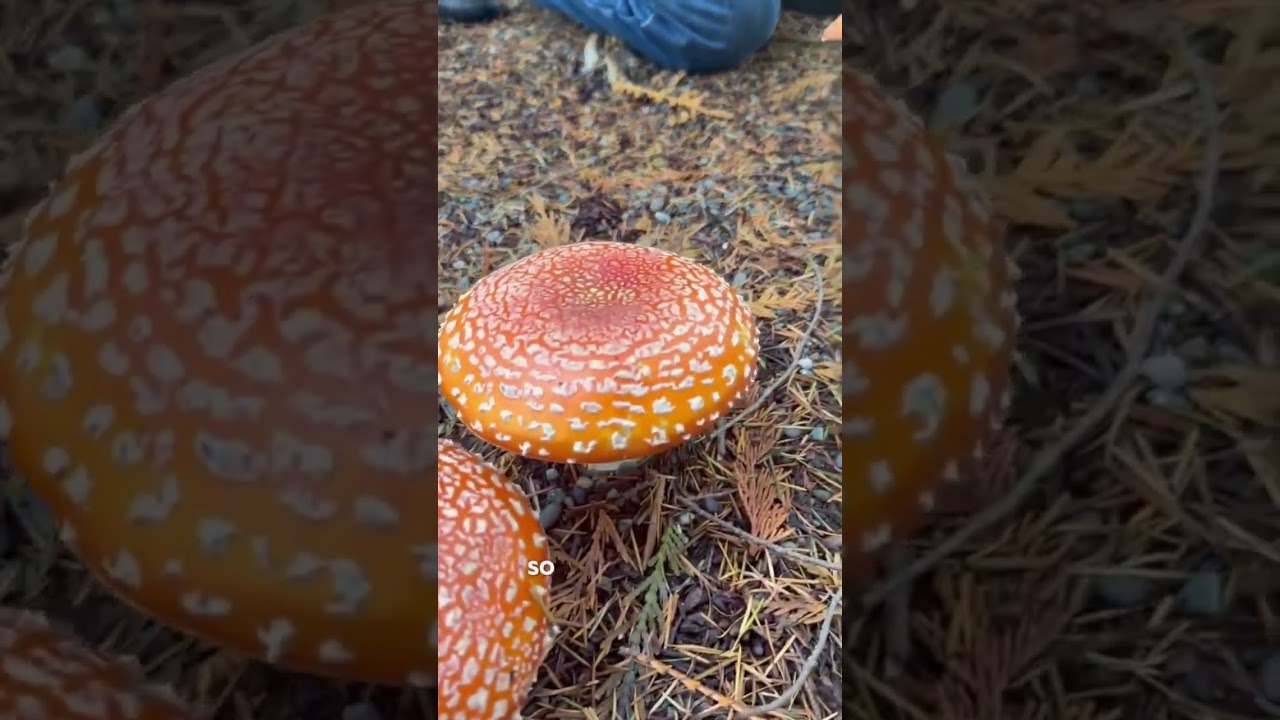
Transcript

[0:01] I bought into the propaganda and I

[0:04] really believed that if you took LST

[0:06] five or six times you were certifiably

[0:08] insane that that's all it takes

[0:10] definitely ascertained that that's true

[0:21] breaking news we are all animals all

[0:25] animals dream

[0:26] and I'm sure those of you who have pets

[0:28] you've seen dogs and they're dreaming

[0:31] well so do we so we all enter into the

[0:33] Psychedelic space every night when we

[0:36] fall asleep we dream

[0:38] and so I was born in 1955.

[0:43] born confused still am

[0:45] but I think we explore other states of

[0:48] Consciousness as a natural state of our

[0:50] being

[0:51] so when I was a child I discovered a

[0:54] microscope

[0:56] then I discovered

[0:59] binoculars and then I got fascinated

[1:01] with a telescope

[1:03] I went wow there's so many different

[1:05] dimensions and looking at evolution

[1:11] this is what my brain used to look like

[1:12] my skull and then I found mushrooms

[1:16] and then suddenly here I am today

Paul Stamets
AuthorPaul Stamets

Watch more from Paul Stamets on YouTube.

View profileWebsite
Explore Topics
Psychedelic-consciousnessAltered-statesConsciousness-biologyDreamingPerception

Got Questions?

Frequently Asked Questions

No—altered states of consciousness are natural features of animal neurology. Humans and animals dream every night, entering a state qualitatively similar to psychedelic consciousness. The claim that psychedelics cause insanity is propaganda unsupported by neurobiological evidence.
Both dreams and psychedelic states are altered states of consciousness involving vivid perception, altered time/space, and access to unconscious material. Since dreaming is a normal nightly occurrence for all animals, psychedelic states represent a natural dimension of consciousness rather than an aberration.
The capacity for altered states—like dreaming—has been preserved across millions of years of evolution, suggesting it serves adaptive functions. This implies altered states are a feature, not a bug, in how human cognition and perception develop.
Cultural and governmental narratives in the 20th century claimed psychedelics caused insanity, but this was policy-driven rather than evidence-based. The distinction between acceptable and dangerous substances was legal and social, not neurological.
It means recognizing that humans naturally access multiple states of consciousness—waking, dreaming, and potentially others. Rather than treating altered states as pathological, this perspective frames them as dimensions of perception that reveal capacities already present in human neurology.

Continue Reading

More on Featured

View All
Amanita Muscaria: History, Identification & Safety of Fly Agaric
Featured

Amanita Muscaria: History, Identification & Safety of Fly Agaric

Amanita muscaria, the fly agaric, has ancient roots in pest control and cultural mythology. Despite its striking beauty, this mushroom poses…

1 min read
Lactarius Deliciosus: Identifying & Foraging the Saffron Cap
Featured

Lactarius Deliciosus: Identifying & Foraging the Saffron Cap

The saffron milk cap (Lactarius deliciosus) is an easy-to-identify edible mushroom with striking green staining and orange milk. Learn how t…

1 min read
Winter Chanterelle: Late-Season Edible Mushroom Identification
Featured

Winter Chanterelle: Late-Season Edible Mushroom Identification

The winter chanterelle (Craterellus tubaeformis) is a cold-hardy edible mushroom that thrives in late-season forests. Its trumpet shape, rid…

1 min read
Psychedelics in Media & Science: Why the Field Changed
Featured

Psychedelics in Media & Science: Why the Field Changed

A SXSW panel explores how documentaries, books, and research shifted public perception of psychedelics from taboo to therapeutic potential.…

1 min read

Keep exploring

Continue your journey

More wisdom and gatherings from across the BrightStar directory.

More Articles

Browse the full library of teachings, interviews, and guides.

Back to all articles →

Teachers & Artists

Explore the lineages, musicians, and guides of the conscious world.

Explore artists →

Find an Event

Kirtan, retreats, sound baths, breathwork, festivals — happening soon.

Browse events →
Read more from BrightStarCreate Free Account
Host your own gatherings?Try the Demo